_副本.png)
Çekici bonuslar ve kazançlı oyunlarla dikkat çeken pragmatic play dünyasına adım atın Pragmatic Play Oyunlarının Çeşitliliği ve Kalitesi Oyun Geliştirme Süreci ve Yenilikler Pragmatic...

Is a cross-chain swap really “one transaction,” and does a wallet that shows a warning automatically make the trade safe? Those assumptions are convenient—and often wrong. Moving value across Ethereum and other EVM networks involves several separate systems: token contracts, decentralized exchanges, bridges or interoperability protocols, smart-contract permissions, and the wallet interface that helps a user interpret them. A mistake in any one layer can turn a routine trade into an expensive or irreversible error.
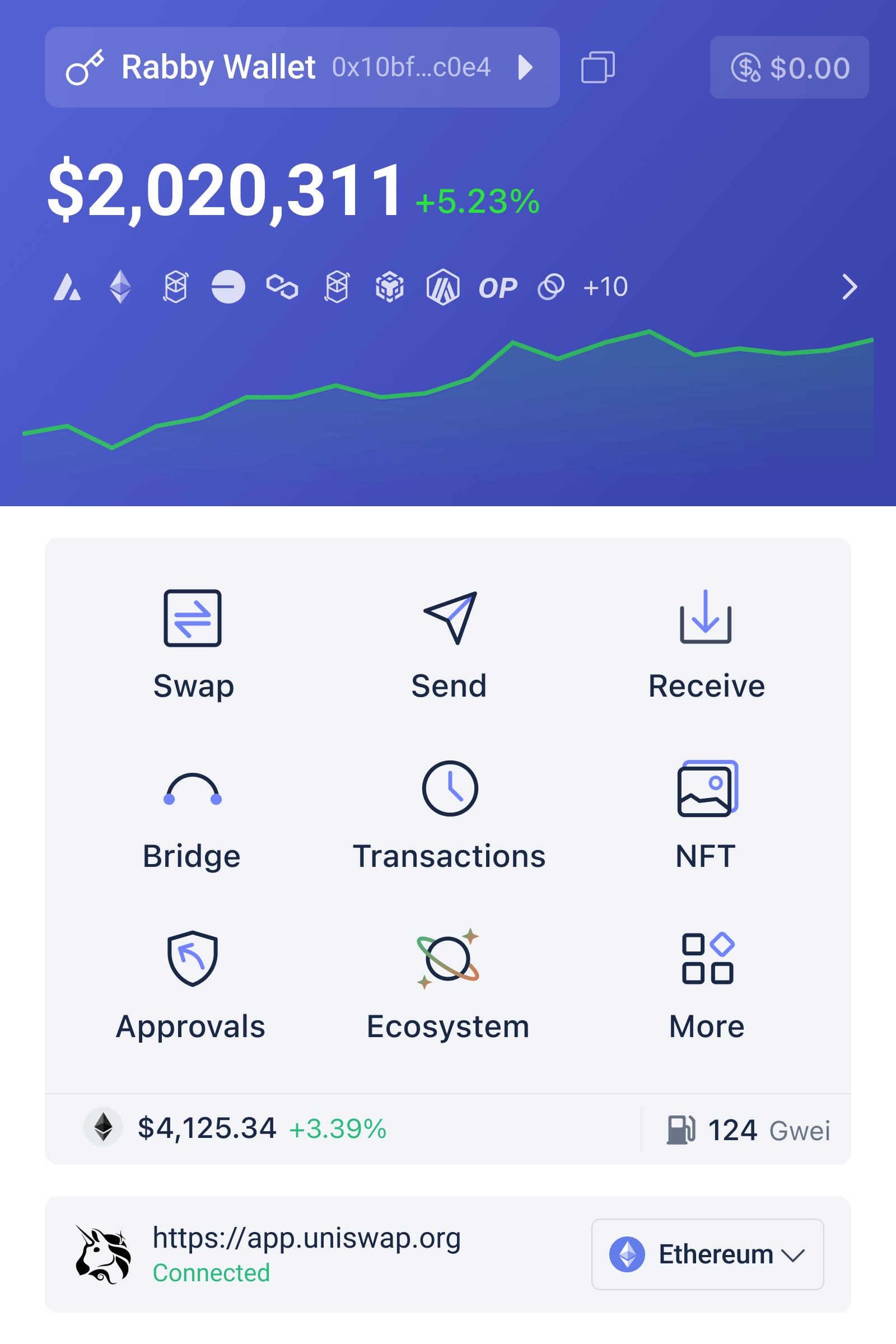
For US DeFi users, the practical challenge is not merely finding a favorable quoted rate. It is understanding what the wallet is authorizing, which chain holds the asset, where the transaction is actually going, and whether a permission remains active afterward. Rabby’s focus on Ethereum and EVM networks, including its recent positioning as a wallet for broad on-chain use across EVM chains, is relevant because a multi-chain wallet can expose more context than a single-network interface. But visibility is not the same as protection. The user still has to read the transaction and respect the limits of automated warnings.
Myth One: A Cross-Chain Swap Is Just a Larger Swap
A conventional token swap usually occurs on one blockchain. A decentralized exchange contract receives permission to spend one token, trades it against another asset, and sends the output to the user’s address on that same network. A cross-chain transaction is more complicated. It may begin with a token deposit into a bridge, lock or burn that asset, transmit a message to another network, and release or mint a representation of the asset there. In other designs, a liquidity provider on the destination chain pays out the requested asset after receiving proof that the source-side action occurred.
The word “swap” can conceal this architecture. A user may think they are exchanging USDC on one chain for ETH on another, while the underlying process combines a source-chain approval, a bridge action, a message-passing step, and a destination-chain swap. These steps can have different failure modes. The source transaction may succeed while the destination action is delayed. A quoted output may change before execution. A bridge may be operational but unable to complete a message promptly. Network congestion can affect one side without affecting the other.
This leads to a useful distinction: transaction completion is not always the same as economic completion. If funds leave the source wallet but the destination asset has not arrived, the user is in an intermediate state rather than experiencing a simple failed swap. A reputable interface should make that status understandable, but the blockchain itself does not guarantee a smooth consumer experience. Before approving, check the source network, destination network, asset received, minimum output, estimated fees on both sides, and what happens if the route cannot finish immediately.
Another misconception is that a bridge is merely a neutral transport layer. Bridges have different trust assumptions. Some rely on a set of validators or signers, some use cryptographic verification, and some depend on liquidity providers or external messaging systems. “Cross-chain” therefore describes a use case, not a uniform security model. The more components involved, the more important it becomes to understand which contract is receiving funds and whether the route is appropriate for the amount being transferred.
Myth Two: A Token Approval Is the Transfer Itself
On many EVM networks, an approval is a separate transaction from the eventual swap. The token holder tells a smart contract, “You may spend up to this amount of this token from my address.” The decentralized exchange or bridge can then call the token contract to move the permitted amount. This separation improves composability, but it also creates a lingering permission that may outlive the immediate trade.
Approvals are not inherently suspicious. They are a normal part of ERC-20 token mechanics. The danger comes from treating them as harmless administrative clicks. A large or unlimited allowance can give a contract the ability to pull tokens later, if the contract is compromised, upgraded in an unsafe way, incorrectly designed, or deliberately malicious. The approval transaction may look less dramatic than the swap because no token moves at that moment. Its risk is prospective: it changes what another contract is allowed to do.
For a one-time action, a limited approval matching the intended amount generally reduces exposure compared with an unlimited allowance. It may require an additional approval transaction when the user trades again, creating more friction and sometimes another gas cost. That is the trade-off. Convenience favors broad allowances; containment favors narrow ones. Neither setting eliminates smart-contract risk, but the narrower permission limits the damage available through that particular allowance.
Wallet users should also distinguish between an approval for a trusted, expected contract and a signature request that appears during a website interaction but is difficult to interpret. Some signatures do not immediately transfer tokens, yet they can authorize actions through systems that support off-chain permits or delegated execution. The important question is not simply, “Does this cost gas?” A better question is, “What authority does this message or transaction grant, to whom, over which assets, and for how long?”
Approval management is therefore an ongoing hygiene practice, not a one-time setup step. Periodically review allowances on the networks you use, especially after experimenting with unfamiliar applications. Revoke permissions that are no longer needed, but remember that revocation itself is an on-chain transaction and may require network gas. A user with many small approvals can face a practical cost-benefit decision: cleaning everything immediately may be expensive, while leaving high-value or unfamiliar allowances untouched increases potential exposure.
Myth Three: A Wallet Warning Is a Security Guarantee
A security-focused wallet can simulate transactions, identify the assets involved, show the likely recipient, and flag patterns associated with known risks. These features are valuable because raw transaction data is difficult for most people to interpret. When installing a browser extension, users who want to evaluate Rabby should use the project’s official distribution path and verify the extension before importing or connecting a wallet; the installation source matters because a convincing fake wallet can capture a recovery phrase before any on-chain warning has a chance to appear. A starting point for locating the official download information is here.
Still, warnings are aids to judgment rather than guarantees. Simulation depends on the transaction being represented accurately and on the relevant contracts behaving consistently between simulation and execution. A malicious website may use a legitimate contract in an unexpected way. A contract can be technically valid while carrying economic or governance risks that a wallet cannot fully assess. Price impact, low liquidity, bridge solvency, oracle behavior, and future contract upgrades may not be captured by a simple “safe” or “unsafe” label.
The most useful wallet habit is to treat the interface as a translator. Ask whether the displayed action matches the action you intended. If you mean to swap a modest amount of one stablecoin, a request to approve an unrelated token, interact with an unfamiliar spender, or send funds to an unexpected address is a reason to stop. If the wallet shows that a transaction will grant a large allowance, pause before confirming—even if the website insists the approval is routine.
There is also a distinction between wallet security and endpoint security. A browser extension can be correctly built and still be undermined by a compromised computer, malicious browser extension, clipboard replacement, phishing page, or exposed recovery phrase. Hardware wallets can reduce the risk of a remote attacker signing silently, but they do not make a user immune to approving a harmful transaction on the device’s screen. Security is layered: protect the recovery phrase, limit the funds in a hot wallet, use a separate wallet for experimentation, and verify the domain and transaction details before signing.
A Practical Framework for Safer Cross-Chain Activity
Before a cross-chain swap, first define the transaction in plain language: “Move this asset from this source chain, and receive that asset on this destination chain, at no less than this amount.” If you cannot state the action clearly, do not sign yet. Then inspect the route. Identify whether it uses a bridge, a liquidity network, a swap on one or both chains, or some combination. This matters because the displayed fee may not include every cost, and the apparent output may depend on a later destination-side step.
Next, separate three questions that interfaces often compress into one button. What contract is being approved? What contract is executing the swap or bridge? What address will ultimately receive the destination asset? These may be related but are not necessarily identical. A familiar token symbol is not enough evidence: attackers can create tokens with names and logos that resemble established assets. Contract addresses and the selected network deserve more attention than branding.
Use a small test transaction when the route, bridge, or application is unfamiliar. This is not a guarantee, and it introduces extra fees, but it can reveal whether the destination network is configured correctly and whether the received asset is the one expected. For larger positions, consider splitting execution rather than treating a successful first attempt as proof that every future transaction is safe. Conditions change: contracts upgrade, liquidity moves, and websites can be compromised.
After the trade, check more than the wallet balance. Confirm that the destination asset arrived on the intended chain, review whether the approval remains larger than necessary, and record the transaction hash if support or investigation is later needed. If an asset is missing, avoid immediately signing another “recovery” transaction offered by a random support account. A genuine delay, an incorrect network view, and a malicious approval request can look confusingly similar to an inexperienced user.
The strongest reusable rule is simple: minimize authority, minimize value at risk, and maximize verification at the points where the transaction changes chains or permissions. This does not mean avoiding DeFi altogether. It means recognizing that convenience features shift complexity into the background, where it can be harder to notice. A wallet that explains those hidden steps is useful; a user who understands them is safer.
What to Watch as EVM Wallets Mature
Wallets are likely to compete less on basic address management and more on transaction interpretation, cross-chain status tracking, approval controls, and protection against deceptive signing requests. If these tools become more accurate and more transparent, users may be able to compare routes by trust assumptions and failure behavior rather than by headline fees alone. That would be a meaningful improvement because the cheapest route is not necessarily the route with the smallest total risk.
The unresolved issue is how much judgment can realistically be automated. A wallet may detect that a contract is unusual, but it cannot decide whether a volatile trade is economically sensible for every user. It may display a bridge’s mechanics, but it cannot eliminate the bridge’s underlying trust model. The sensible expectation is conditional: better tooling can reduce avoidable mistakes, especially around approvals and recipient addresses, while contract risk, market risk, and user decision-making remain.
Frequently Asked Questions
Should I always use an unlimited token approval for convenience?
No. An unlimited approval can reduce repeated transactions and gas costs, but it grants broader spending authority than a single trade may require. A limited approval is generally more contained. The right choice depends on the contract, the value involved, how often you use the application, and your willingness to review or revoke permissions later.
Why did my cross-chain swap leave my wallet but not arrive immediately?
Cross-chain routes may include separate source and destination steps. The source transaction can confirm while message delivery, liquidity settlement, or a destination-side swap is still pending. Check the transaction status through the wallet and the relevant network explorers, and avoid signing an unsolicited follow-up transaction until you understand what remains incomplete.
Does using a security-focused wallet remove the need to verify a website?
No. Wallet warnings and simulations can provide important context, but they cannot guarantee that a website, contract, bridge, or economic route is trustworthy. Verify the installation source, website domain, network, token addresses, approval amount, and final recipient before signing.